
Understand the condition. Ask better questions. Make informed decisions.
Brain and spine problems often come with unfamiliar terminology, complicated scan reports and important treatment decisions. This education centre is designed to help patients and families understand what those findings may mean, what questions are worth asking and how to prepare for a meaningful discussion with their medical team.

Start with understanding
You do not need to understand every medical term.
You should, however, understand the diagnosis being discussed, why a treatment is being considered and what reasonable questions you can ask before deciding what comes next.

The first step is understanding what the scan actually means.
Being told that something has been found on a brain scan can be unsettling. The medical terminology may sound serious, and it is natural to immediately wonder whether surgery is needed. But the more useful starting point is usually to understand what has been found, where it is located, what symptoms it may explain and what reasonable options exist.
Explore common brain and neurosurgical topics
Select a topic for a short educational introduction.
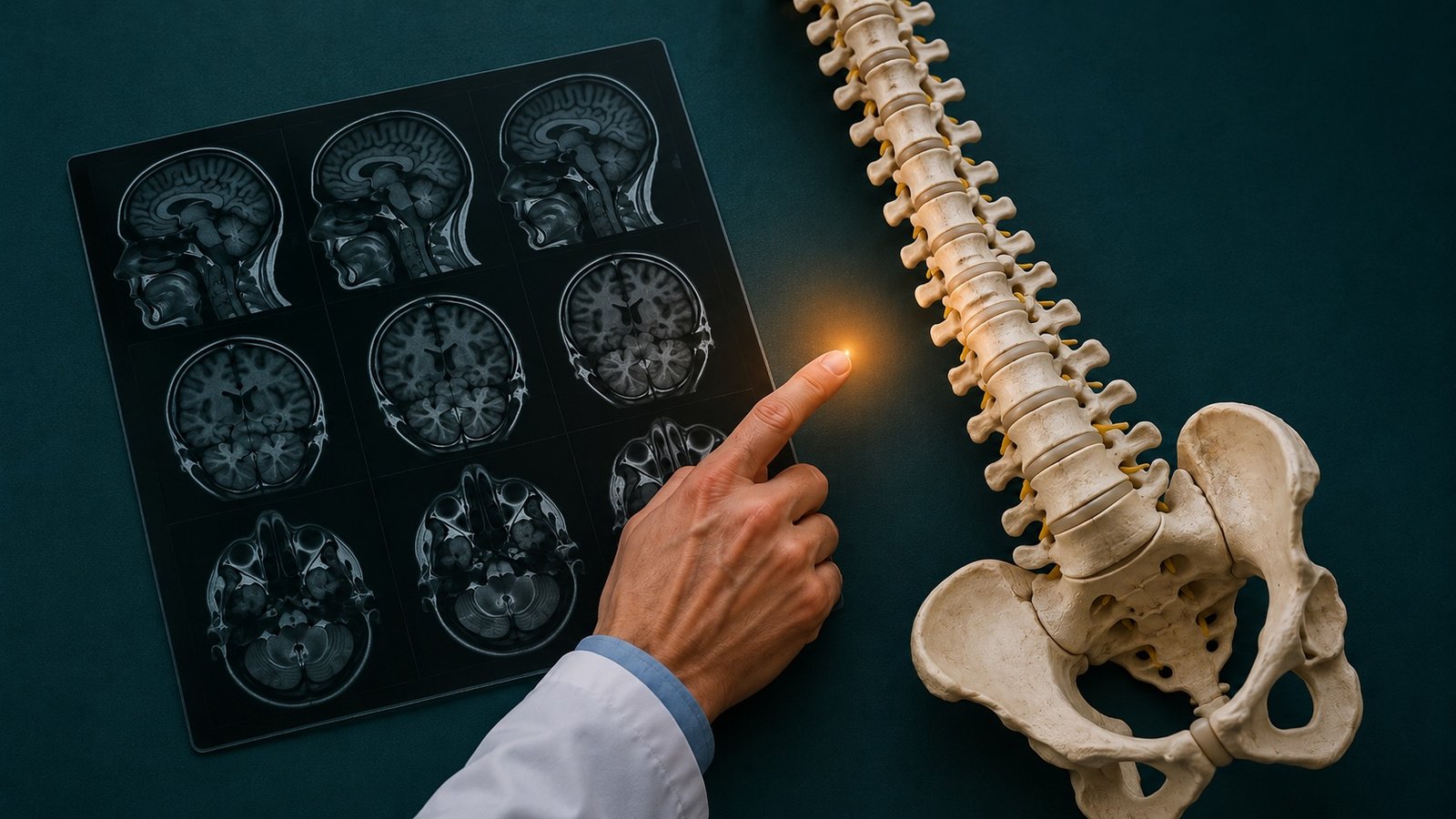
A spine scan is only one part of the story.
Back pain, neck pain, numbness, weakness and walking difficulty can arise for many different reasons. A scan may show disc wear, a bulge or narrowing, but the key question is whether that finding actually matches the patient's symptoms and examination. Treatment decisions are usually based on the relationship between the scan, the symptoms and the person's day-to-day function.
What does the scan show?
Imaging can reveal disc changes, narrowing, nerve compression, spinal cord changes, tumours or other structural findings.
Does it match the symptoms?
A finding becomes more meaningful when its location and severity correspond with the pain, numbness, weakness or other symptoms being experienced.
Is function being affected?
Walking, hand function, balance and progressive weakness can influence how quickly further assessment may be required.
Many people have age-related changes on spine imaging without severe symptoms. The significance of a scan finding depends on whether it is producing nerve or spinal cord compression, whether symptoms are progressing and how much the condition is affecting everyday life.
Explore common spine and spinal cord topics
Select a topic for a short educational overview. These explanations are intended to help you understand the language used in a consultation and the kinds of questions that may be discussed.

How does your everyday routine treat your spine?
Sitting for long periods, working on a screen, driving, lifting and simply not moving enough can place repeated demands on the neck and back. This short check helps you look at your daily movement and posture habits rather than trying to diagnose a medical condition.
How long do you usually remain seated before changing position?
Think about your typical workday rather than your best day.
During a long sitting period, how often do you get up or change position?
Even short movement breaks can interrupt long periods of static posture.
Where is your phone or computer screen usually positioned?
Consider whether you frequently bend your neck downward or lean forward to see the screen.
How often is purposeful physical activity part of your week?
This can include walking, exercise, sport or another form of regular movement suitable for you.
When lifting something heavy, which description fits you best?
Think about luggage, household objects, work equipment or gym weights.
If you drive or travel for long periods, how often do you change position or take a break?
If long journeys are uncommon for you, choose the first option.
A few everyday patterns may be worth paying attention to.
This summary reflects only the lifestyle answers you selected. It does not evaluate your spine, diagnose a condition or determine whether treatment is required.
Persistent or worsening pain, numbness, weakness, difficulty walking, major balance changes or new bladder or bowel dysfunction should be discussed with an appropriate medical professional. Sudden or severe neurological symptoms require prompt medical assessment.